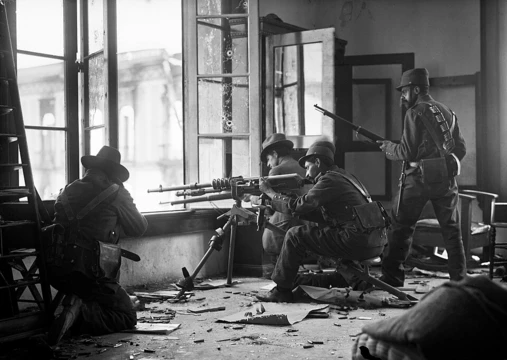
Pancho Villa
Mexican revolutionary and guerrilla leader of the Mexican Revolution.

Francisco "Pancho" Villa (born José Doroteo Arango Arámbula; 5 June 1878 – 20 July 1923) was a Mexican revolutionary, guerrilla leader, and politician. He was a key figure in the Mexican Revolution, which forced out President and dictator Porfirio Díaz, ending the Porfiriato, and brought Francisco I. Madero to power in 1911. Villa later broke with Venustiano Carranza, allied with Emiliano Zapata, and served as provisional governor of Chihuahua from 1913 to 1914. At the height of his power and popularity in late 1914 and early 1915, the U.S. considered recognizing Villa as Mexico's legitimate president.
- born
- 5 June 1878
- died
- 20 July 1923
- field
- Revolutionary, guerrilla leader, politician
- nationality
- Mexican
- known_for
- Key figure in the Mexican Revolution; raid on Columbus, New Mexico; starring as
Verified Timeline
Lore & Background
Villa told conflicting stories about his early life. According to most sources, he was born José Doroteo Arango Arámbula on 5 June 1878. He received basic literacy from a church-run school. His father was sharecropper Agustín Arango, and his mother was Micaela Arámbula. He grew up at the Rancho de la Coyotada in Durango. After his father died, he worked as a sharecropper, muleskinner, butcher, bricklayer, and foreman for a U.S. railway company. At age 16, according to his dictated memoirs, he moved to Chihuahua, then returned to Durango to track down and kill a hacienda owner named Agustín López Negrete who had raped his sister, afterward stealing a horse and fleeing to the Sierra Madre Occidental. In fact, on September 22, 1894 he shot Negrete in the foot. He became a bandit known as "Arango." In 1898 he was arrested for gun and mule theft. In 1902, the rurales arrested him for stealing mules and assault; he was spared the death sentence due to connections with Pablo Valenzuela. He was forcibly inducted into the Federal Army, deserted, and fled to Chihuahua. After killing an army officer and stealing his horse in 1903, he adopted the name Francisco "Pancho" Villa. Until 1910, he alternated thievery with legitimate work. His outlook changed after meeting Abraham González, who convinced him he could fight for the people and hurt the hacienda owners through banditry.
Reader's Guide
Villa's significance lies in his role as a central figure of the Mexican Revolution, though his faction did not prevail. He helped oust Porfirio Díaz and bring Francisco I. Madero to power, then fought against Victoriano Huerta after Madero's ouster. After breaking with Carranza, Villa dominated a meeting of revolutionary generals that excluded Carranza and helped create a coalition government, allying with Emiliano Zapata. He advocated land reform but did not implement it when he had power. His raid on Columbus, New Mexico in 1916 aimed to goad the U.S. into invading Mexico, but despite a major contingent of soldiers and superior military technology, the U.S. failed to capture him. After Carranza's ouster in 1920, Villa negotiated an amnesty with interim president Adolfo de la Huerta and was given a landed estate on the condition he retire from politics. He was assassinated in 1923. In life, Villa crafted his own image as an internationally known revolutionary hero, starring as himself in Hollywood films and giving interviews to foreign journalists, most notably John Reed. After his death, he was excluded from the pantheon of revolutionary heroes until the Sonoran generals Obregón and Calles, whom he battled during the Revolution, were gone from the political stage. His exclusion from the official narrative might have contributed to his continued posthumous popular acclaim. He is celebrated in corridos, films, and novels. In 1976, his remains were reburied in the Monument to the Revolution in Mexico City in a huge public ceremony.
Did You Know?
- Villa starred as himself in Hollywood films and gave interviews to foreign journalists, most notably John Reed.
- On September 22, 1894, Villa shot hacienda owner Agustín López Negrete in the foot after Negrete raped his sister.
- Villa was known to his friends as La Cucaracha ('the cockroach').
- At the outbreak of the Mexican Revolution in 1910, Villa was 32 years old.
- In 1976, Villa's remains were reburied in the Monument to the Revolution in Mexico City in a huge public ceremony.
From Hacienda Boy to Bandit to Revolutionary
Born José Doroteo Arango Arámbula on 5 June 1878, the future revolutionary grew up at the Rancho de la Coyotada, one of Durango's largest haciendas, eldest of five children. After his sharecropper father died, Doroteo left his brief church-school education behind and worked as a muleskinner, butcher, bricklayer, and foreman for a U.S. railway. At sixteen he fled to Chihuahua, then returned to confront Agustín López Negrete, a hacienda owner who had assaulted his sister. On 22 September 1894 he shot Negrete in the foot, stole a horse, and vanished into the Sierra Madre Occidental, drifting into banditry under the alias "Arango." Arrested in 1898 for gun and mule theft, and again in 1902 by Díaz's rurales, he escaped the death penalty through a local patron's protection and was conscripted into the Federal Army. He deserted, killed an officer in 1903, and from then on answered to Francisco "Pancho" Villa, named after his grandfather. Friends called him La Cucaracha. The turning point came when he met Abraham González, local agent for presidential candidate Francisco Madero, who reframed his outlawry as a fight against the hacienda system. By 1910, at thirty-two, he was ready to trade banditry for revolution.
Revolutionary Politics and the Carranza Split
Villa was a central force in the Mexican Revolution that toppled dictator Porfirio Díaz, ended the Porfiriato, and installed Francisco I. Madero as president in 1911. When General Victoriano Huerta overthrew Madero in a February 1913 coup, Villa threw in with the anti-Huerta Constitutionalist Army under Venustiano Carranza. After Huerta was defeated and exiled in July 1914, Villa broke with Carranza and dominated a meeting of revolutionary generals that deliberately excluded the Carranza faction, helping to forge a coalition government. In this period he and Emiliano Zapata became formal allies, united by a shared commitment to land reform—though Villa never actually implemented such reforms when he held power. He also served as provisional governor of Chihuahua from 1913 to 1914. At the peak of his influence in late 1914 and early 1915, the United States seriously considered recognizing Villa as Mexico's legitimate president, a testament to the political weight he commanded during that turbulent window.
The War Against Carranza and the Columbus Raid
When Carranza challenged Villa in late 1914, civil war erupted. In the summer of 1915, Constitutionalist general Álvaro Obregón delivered a decisive defeat to Villa's forces, and the United States directly aided Carranza at the Second Battle of Agua Prieta. Stripped of resources to purchase arms or pay soldiers' wages, much of Villa's army simply deserted. Furious at American backing for Carranza, Villa launched a raid on the border town of Columbus, New Mexico, in 1916, deliberately trying to provoke the United States into invading Mexico. The strategy backfired: despite deploying a major contingent of troops and superior military technology, the U.S. failed to capture him. The episode cemented his reputation in Mexico as a hero who dared to stand up to the United States, while some American media outlets painted him as a villain and a murderer. Though his faction ultimately did not prevail in the Revolution, Villa remained one of its most prominent and enduring figures.
Image, Exile from the Official Narrative, and Posthumous Glory
Villa was a shrewd self-promoter in his own lifetime, helping to craft his image as an internationally recognized revolutionary hero. He starred as himself in Hollywood films and gave interviews to foreign journalists, most notably the American writer John Reed. After his death in 1923—assassinated following a 1920 amnesty negotiated with interim president Adolfo de la Huerta, in which he received a landed estate on the condition he retire from politics—Villa was conspicuously excluded from the official pantheon of revolutionary heroes. That omission persisted until the Sonoran generals Obregón and Calles, whom he had battled during the Revolution, left the political stage. Paradoxically, his exclusion from the state-sanctioned narrative may have fueled his continued popular acclaim. He was celebrated for decades through corridos, films about his life, and novels by prominent writers. In 1976, his remains were reinterred in the Monument to the Revolution in Mexico City during a massive public ceremony, a belated national acknowledgment of the man the people had never stopped remembering.
More in Revolutionary Leaders & Icons 1-24
Elsewhere in the Revolutionary Leaders & Icons universe
Spotted an error? Know more?
This is a living reference — every entry is fact-audited, and reader corrections feed straight into our audit queue. Suggest an edit · See this site's audit record